Power Factor Correction that lowers your electricity bill
If your bill includes kVA demand or reactive energy charges, you are paying for power your plant never uses. We measure your site, design the right correction and prove the savings, using WEG components, our own detuned reactors and Sinexcel active equipment.

What is power factor, and why are you paying for it?
Motors, pumps, compressors, fans and transformers need two kinds of electricity. Working power (kW) turns shafts and runs your process. Reactive power (kVAr) builds the magnetic fields these machines need to start working. It does no useful work, but it still has to travel through your cables and transformer.
Your supply has to carry both. The total is called apparent power (kVA), and many Eskom and municipal tariffs bill you on it. Power factor is how much of that total is doing real work. A power factor of 1.0 means no waste. At 0.75, a quarter of your capacity is spent carrying reactive power.
Think of a glass of beer. The beer is the working power you want. The foam is reactive power: it fills the glass but doesn’t quench your thirst. You pay for the full glass. Power factor correction removes the foam, so the same glass holds more beer.
The same plant, before and after correction
Illustration: a plant drawing 400 kW of working power.
Before: about 533 kVA drawn to deliver 400 kW.
After: about 408 kVA for the same 400 kW. That’s roughly 23% less demand on your bill and your transformer.
Signs your site needs power factor correction
If any of these sound familiar, an assessment will quickly show what correction is worth to you.
High demand charges
Your kVA demand charge is a large share of the bill, or it keeps climbing while production stays the same.
Reactive energy penalties
Your bill shows a reactive energy (kVArh) charge. That money buys you nothing.
Transformer near its limit
You need more capacity for new equipment, and the utility is quoting for an expensive upgrade.
Old capacitor banks failing
Capacitors bulge, fuses blow or the bank no longer holds your power factor up.
Lots of drives and electronics
Variable speed drives, UPS systems, LED lighting or solar inverters on site, which make harmonics part of the picture.
Heat and nuisance tripping
Cables, breakers or transformers run hot, or protection trips with no obvious cause.
Measure, design, install, verify
We don’t sell a capacitor bank off a catalogue. Every solution starts with real data from your site, and finishes with proof that it worked.
Measure
We connect a power quality recorder at your main supply, typically for about a week, and review your electricity bills.
Design
From the recordings we size the correction, check for harmonics and choose the right technology. You get a clear report with expected savings and payback.
Supply & install
WEG components, our detuned reactors and Sinexcel modules, built into a panel and installed around your production schedule.
Verify
We record again after installation and show you the before-and-after results, then keep the system healthy with scheduled maintenance.
Lower monthly bills
Smaller kVA demand and fewer reactive energy charges, every month the system runs.
Free capacity
Less current in your transformer and cables means room for new equipment without an upgrade.
Longer equipment life
Cooler cables, steadier voltage and fewer losses mean less stress across your installation.
The right technology for your site
Most sites are best served by a capacitor bank. Sites with many drives or electronics need detuned reactors or active equipment. Your assessment tells us which.
| Solution | Best for | Response | Copes with harmonics |
|---|---|---|---|
| Standard capacitor bank | Balanced steady loads with few drives / electronics | Seconds, in steps | Low. Can be damaged by harmonics |
| Detuned capacitor bank | Most modern industrial sites with drives | Seconds, in steps | Good. Reactors protect the capacitors |
| Static var generator (SVG) | Fast-changing loads: welders, cranes, presses, solar generation, unbalanced loads | Milliseconds, stepless | Excellent. Not affected by harmonics |
| Active harmonic filter (AHF) | Sites where harmonics are the main problem | Milliseconds | Excellent. Actively removes harmonics |
Capacitor banks built on WEG components
As a WEG distributor, we build correction panels with WEG’s power factor range, and also supply the components to panel builders and electrical contractors.
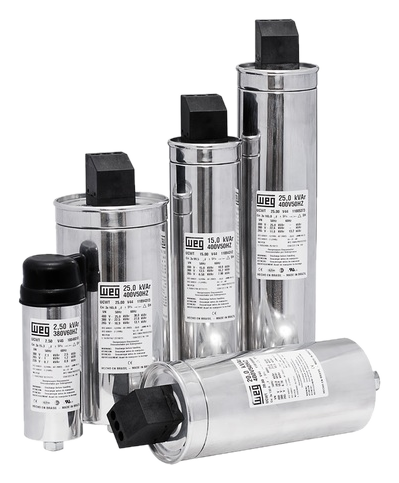
WEG power factor correction capacitors
The core of every bank. WEG three-phase capacitors use self-healing metallised polypropylene film: if a tiny internal fault occurs, the capacitor seals it and keeps working.
- Built-in safety device that disconnects the capacitor if internal pressure builds up
- Very low internal losses, so they run cool and efficiently
- Available in a wide range of kVAr ratings for 400 / 525 and 690 V systems
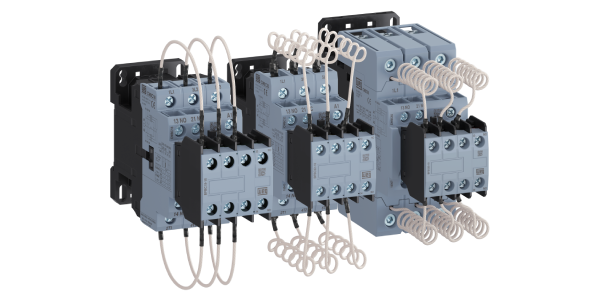
WEG capacitor switching contactors
Switching a capacitor on causes a short, sharp current surge that wears out ordinary contactors. WEG capacitor-duty contactors have built-in pre-charge resistors (the coils you can see on top) that soften that surge.
- Purpose-built for capacitor switching (AC-6b duty)
- Protects capacitors and contacts, so the bank lasts longer
- Compact and DIN-rail mounted for neat panel building
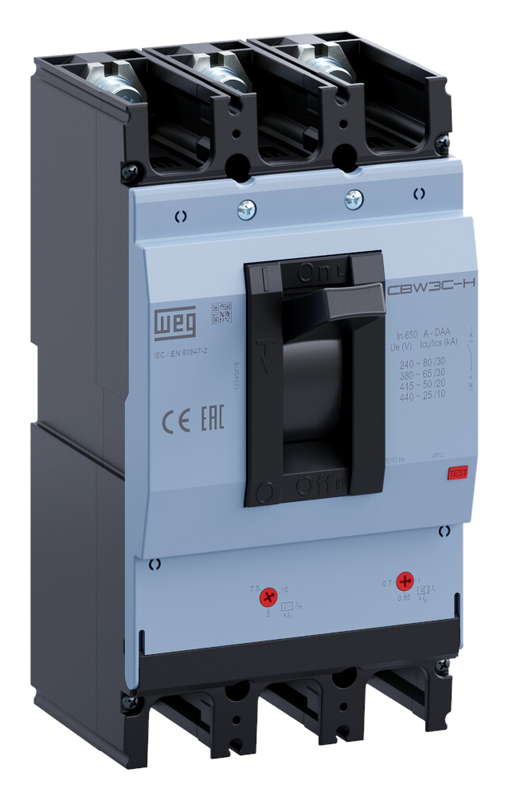
WEG circuit breakers
Every bank needs proper protection. WEG’s new CBW moulded case circuit breakers protect the main incoming supply to the panel, and smaller breakers protect each capacitor step, so a fault in one step never takes down the rest.
- New CBW range from 16 A to 650 A, built to IEC 60947-2
- High breaking capacity, up to 80 kA at 380/415 V, for sites with strong supplies
- Matched to the capacitor and contactor ratings in our designs

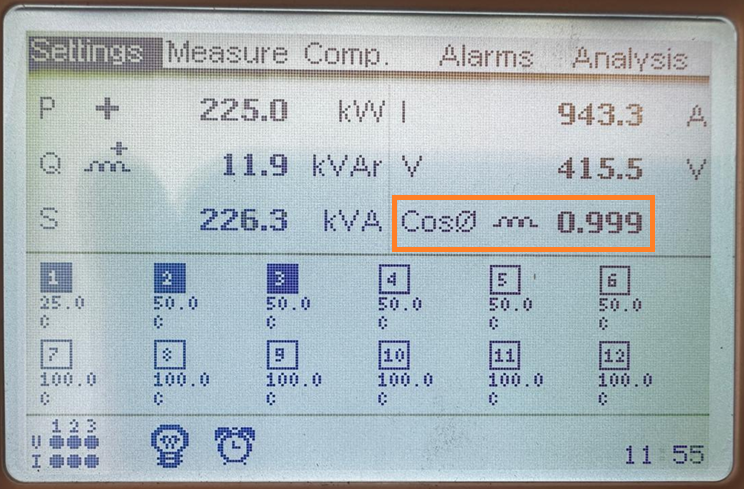
WEG PFW03 power factor controller
The brain of the bank. The PFW03 measures your power factor continuously and switches capacitor steps in and out to keep it on target, typically 0.98 or better, as your load changes through the day.
- Clear display of power factor and electrical readings
- Alarms for low power factor, over-voltage and harmonics
- Can be connected to our Clarity monitoring platform for remote visibility
Unity Power Solutions detuned reactors
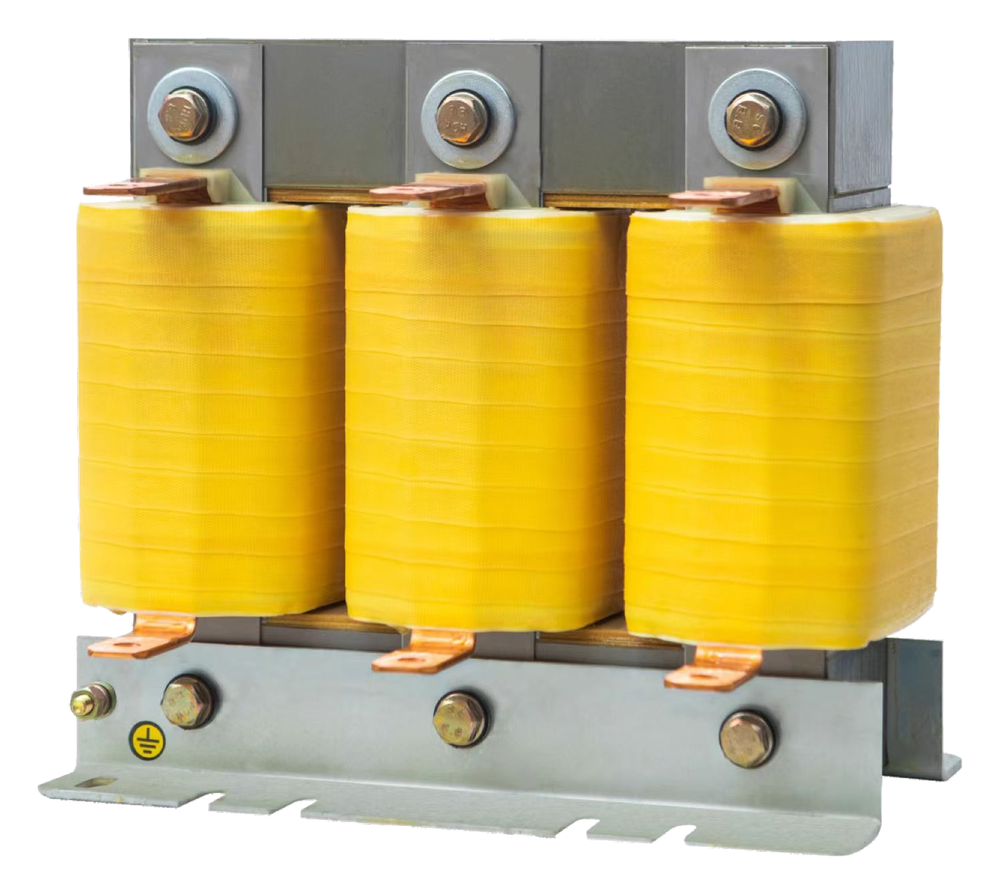
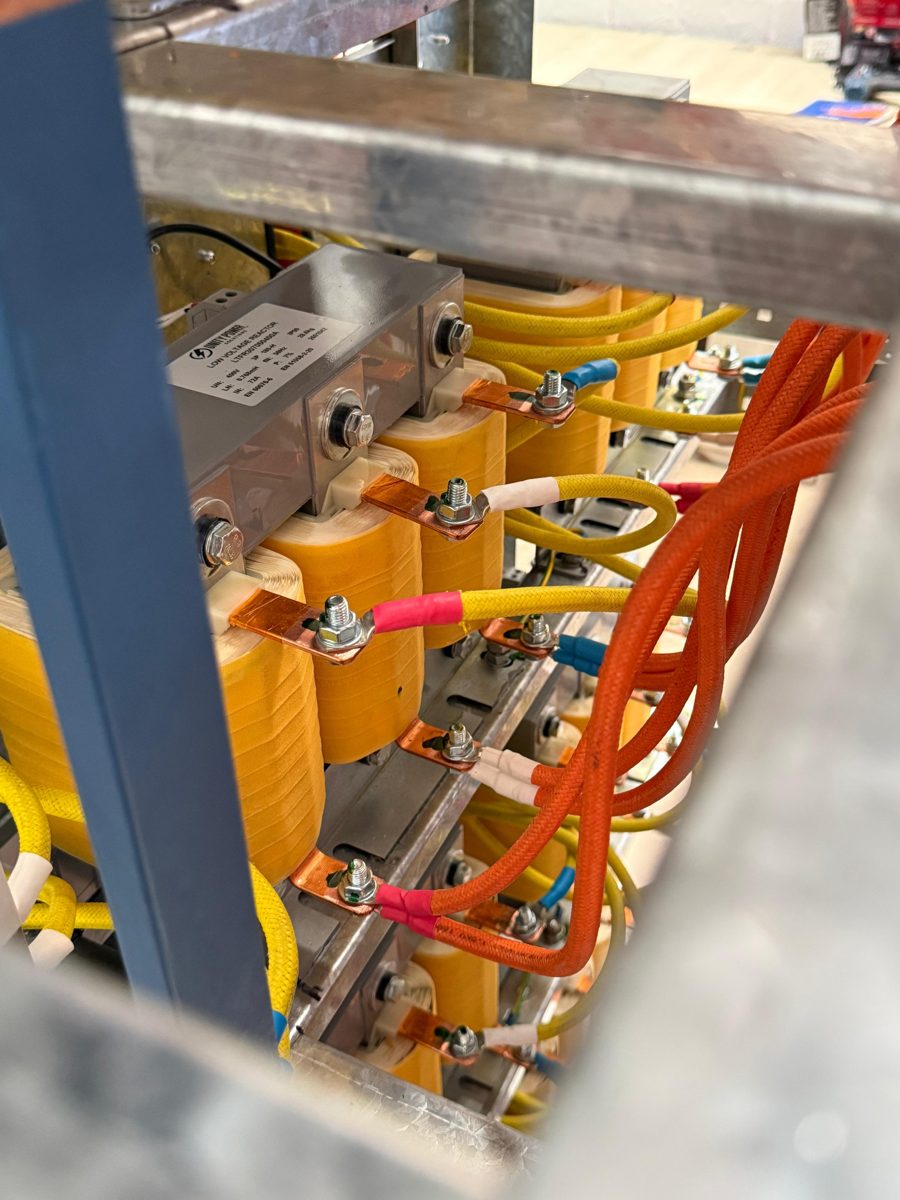
Detuned reactors that protect your capacitors
Modern plants are full of variable speed drives and electronics that create harmonics: electrical “noise” at multiples of the normal 50 Hz. Plain capacitors attract this noise, overheat and fail early. In the worst case they amplify it across the whole site.
A detuned reactor sits in series with each capacitor step and blocks that path. The capacitors still correct your power factor, but harmonics can no longer damage them.
- 7% detuning as standard (tuned to 189 Hz), the right choice for most industrial sites
- 14% on request (tuned to 134 Hz), for sites with high levels of the 3rd harmonic
- Our own reactor range, stocked locally for short lead times
- Matched to WEG capacitor steps for a complete, tested detuned bank

Complete detuned PFC panels
WEG capacitors, contactors, breakers and controller, combined with our detuned reactors in a properly ventilated panel, then designed, built, installed and commissioned by one team.
Sinexcel active power quality equipment
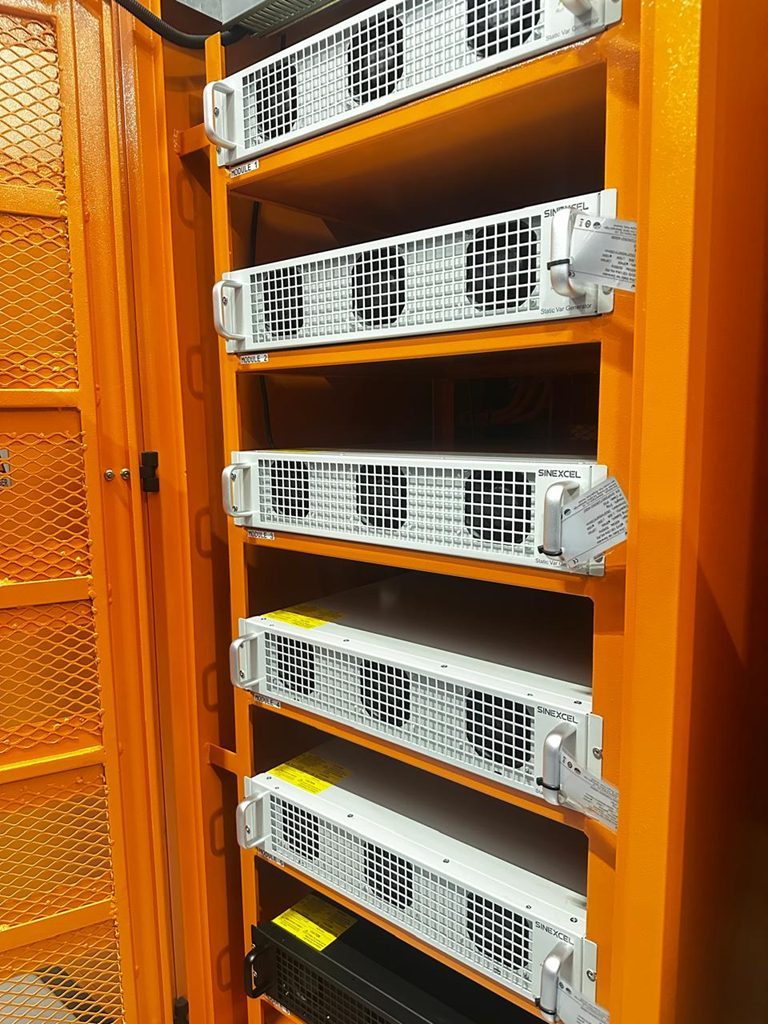

Sinexcel static var generators (SVG)
An SVG is an electronic alternative to a capacitor bank. Instead of switching capacitors in steps, it produces exactly the reactive power needed, adjusting in milliseconds. That makes it ideal where loads change fast.
- Responds in under 15 milliseconds, with no steps and no switching surges
- Corrects both lagging and leading power factor, which suits sites with solar or long cables
- Can also balance uneven loading between the three phases
- Modular: wall-mounted or rack-mounted, add modules as your site grows
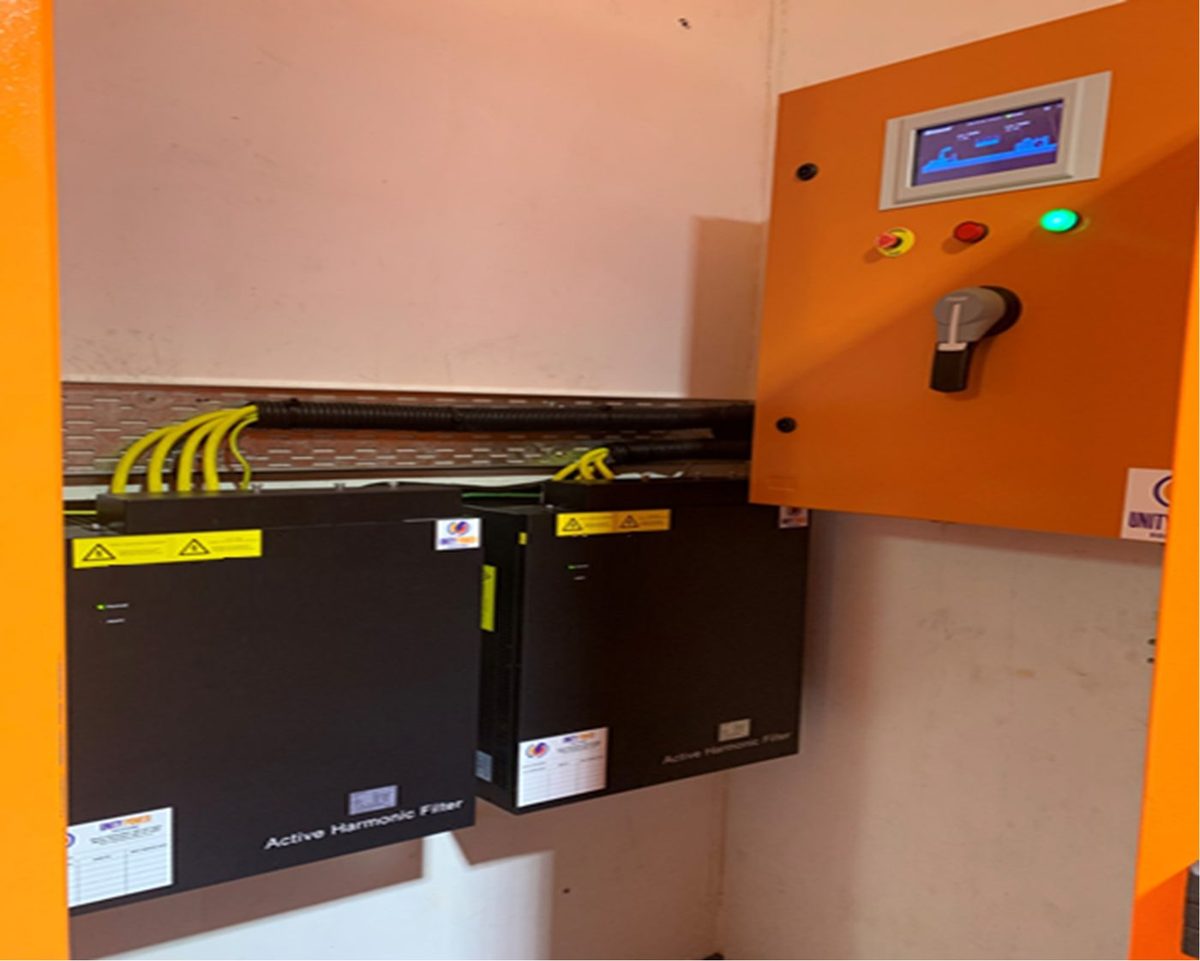
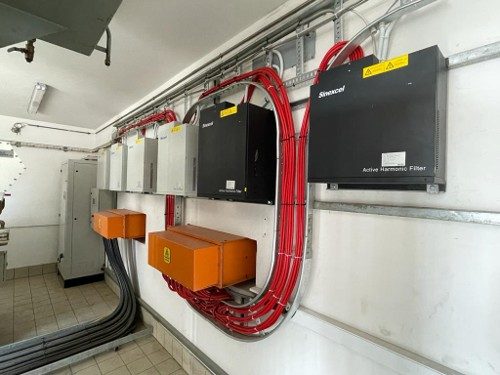

Sinexcel active harmonic filters (AHF)
Where harmonics are the main problem, an active harmonic filter measures the distortion and injects an equal and opposite current to cancel it, in real time. The result is a cleaner supply for every machine on site.
- Removes harmonics from the 2nd up to the 50th order
- Also improves power factor and balances phases
- High-efficiency design using silicon carbide technology
- Modular units that can be combined for larger sites
Power factor correction: common questions
How much can power factor correction save?
It depends on your tariff and how low your power factor is today. Sites billed on kVA demand, or paying reactive energy charges, usually see a clear drop on the very next bill. We calculate the expected saving and payback from your actual electricity bills and recordings before you commit to anything.
What power factor should my site aim for?
We design for 0.98 or better. On many Eskom and municipal tariffs, reactive energy charges start once your power factor drops below about 0.96. We’ll confirm the target that makes sense for your specific tariff.
Capacitor bank or SVG: which do I need?
For steady loads, a capacitor bank (detuned if you have drives) is the most cost-effective choice. If your load changes quickly, as with welders, cranes, presses or solar, or you need very precise correction, an SVG is the better fit. Many sites use a combination. The assessment answers this with data.
Why do my capacitors keep failing?
The most common cause is harmonics from drives and electronics, often combined with a bank that was never detuned. Adding detuned reactors or an active harmonic filter usually solves it. We can record your site to confirm the cause first.
Will installation stop my production?
We plan installations around your operation. Most of the work is done before a short, scheduled connection, so disruption is kept to a minimum.
Do you sell WEG components without installation?
Yes. We supply WEG capacitors, capacitor contactors, circuit breakers and PFW03 controllers, plus our detuned reactors, to panel builders and electrical contractors across Southern Africa.
Do you maintain existing power factor correction banks?
Yes, including banks we didn’t install. Scheduled maintenance checks capacitor health, contactors, fuses and controller settings, so the bank keeps saving you money.
Find out what poor power factor is costing you
Send us your last three electricity bills and we’ll tell you whether power factor correction is worth it for your site, and roughly what it would save, before any site visit.
Book a power quality assessment- 📞 083 307 9284
- ✉️ sales@unitypowersolutions.co.za
- 📍 Johannesburg, serving Southern Africa