Active Harmonic Filters that stop harmonics damaging your plant
Variable speed drives, UPS systems, LED lighting and solar inverters fill your network with electrical “noise” called harmonics. It overheats cables and transformers, trips breakers and destroys capacitor banks. A Sinexcel active harmonic filter removes it in real time, and we prove the result with before-and-after measurements.
What are harmonics?
Your electricity supply is meant to be a smooth, regular wave. Modern electronic equipment doesn’t draw power smoothly. It takes it in short, sharp gulps, which bends the current out of shape. That distortion is made up of “harmonics”: extra currents at multiples of the normal 50 Hz.
What your supply should look like
A smooth 50 Hz wave. Motors, heaters and lights run cool and efficiently.
What a variable speed drive draws
Sharp twin peaks instead of a smooth curve. The difference is harmonic current.
Only 50 Hz present
Split into its frequencies, a healthy wave is a single bar: the 50 Hz that does the useful work.
An ideal supply: no harmonic current at all.
Harmonics at 250, 350, 550 and 650 Hz
The drive’s current, split the same way. The red bars are harmonic current: no useful work, only extra heat.
Typical for a standard 6-pulse drive with no line reactor. Levels vary with the drive, load and supply.
Think of it like noise on a phone line. The conversation (your useful power) is still there, but the crackle on top makes everything harder work. Equipment has to cope with extra current that does no useful work, and that extra current turns into heat.
The equipment that creates harmonics
Almost every modern site has some of these. The more you have, the bigger the harmonic problem tends to be.
Signs your site has a harmonic problem
Harmonics rarely announce themselves. They show up as “unexplained” faults. If several of these sound familiar, a recording will confirm it.
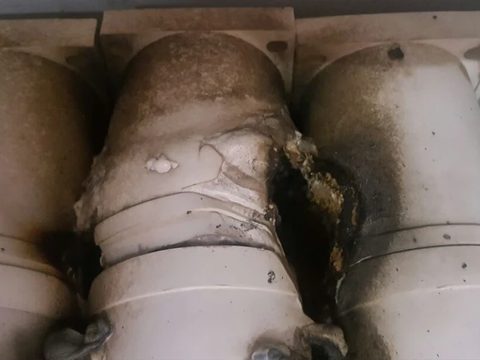
Capacitor banks keep failing
Bulging capacitors, blown fuses and a bank that no longer holds your power factor up.
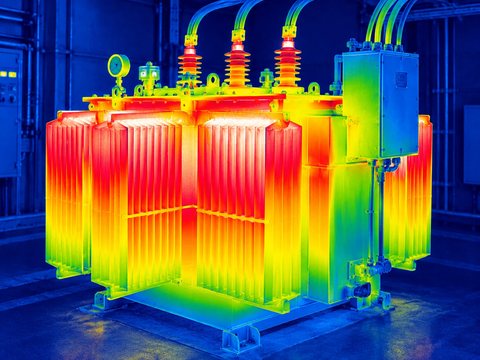
Hot transformers and cables
Equipment running hotter than its load suggests, or a hot neutral conductor.
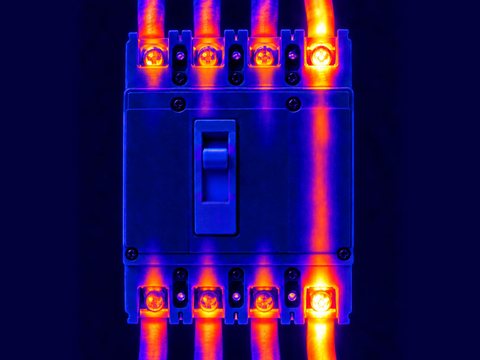
Nuisance tripping
Breakers and protection trip with no obvious overload or fault.
Electronics misbehaving
Drives faulting, PLCs resetting, flickering lights or interference on control signals.
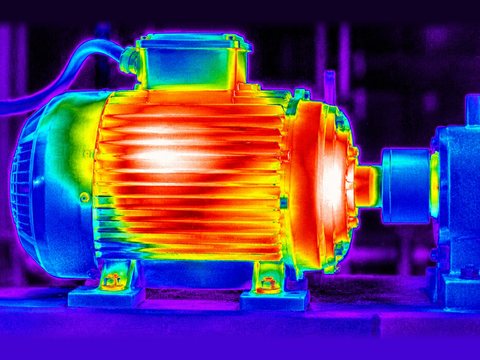
Motors running hot or noisy
Extra heating, vibration and humming, and shorter motor life.
Utility compliance issues
Your supplier or municipality flags distortion at your point of supply, or a new connection needs proof of compliance.
The capacitor photo is from a real site. The other images are illustrations.
How an active harmonic filter cleans your supply
Drives, UPS systems, LED lighting and battery chargers all draw distorted current. Without a filter, that distortion travels back through your main board to the transformer, heating it and everything on the way. An active harmonic filter works like noise-cancelling headphones: it measures the distortion and injects an exact mirror image, so the two cancel out and your transformer only supplies a clean wave.
Filter off: the transformer has to supply the full distorted current, and it overheats (red glow).
Swipe sideways to see the full diagram →
Your load draws
Drives, UPS systems, LED lighting and chargers take current in sharp gulps. The twin-peaked shape is harmonic distortion.
The filter injects
The filter measures that distortion thousands of times a second and injects its exact mirror image within milliseconds.
Your supply sees
The two cancel out. Your transformer and cables only carry a clean wave, so they run cooler and your capacity is freed up.
Measures
Fast current sensors watch the load continuously, so the filter always knows which harmonics are present.
Injects
Power electronics inject the opposite current within milliseconds, cancelling the harmonics before they reach your supply.
Adapts
As machines start, stop and change speed, the filter follows automatically. There’s nothing to switch or retune.
Active harmonic filters
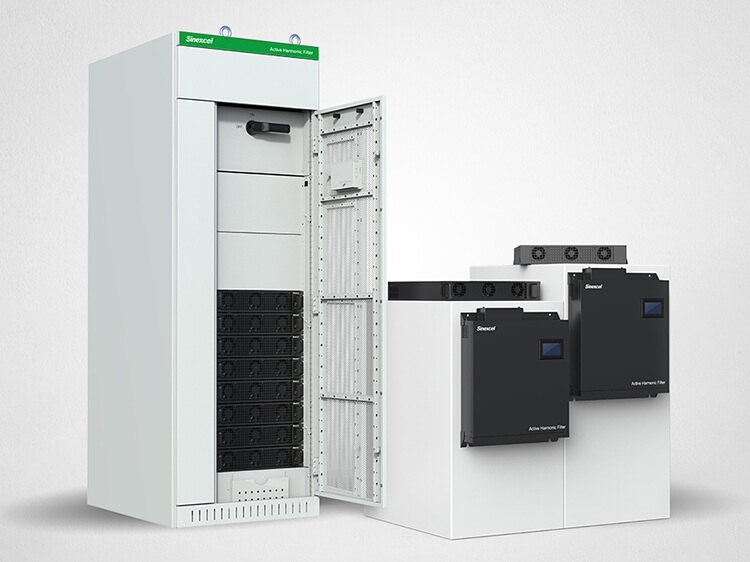
Compact, modular, and fast
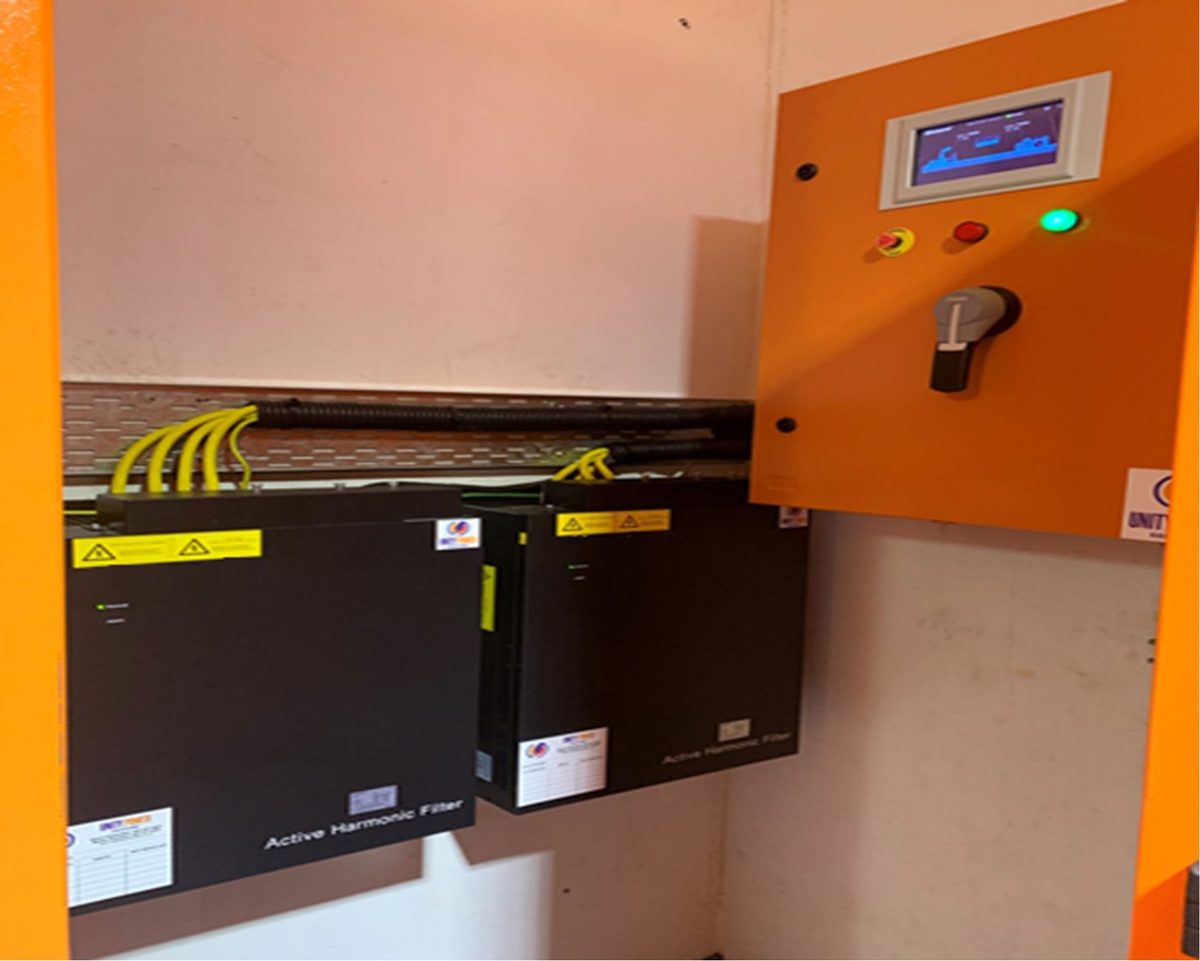
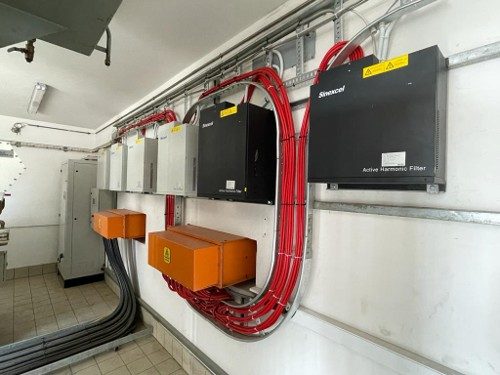
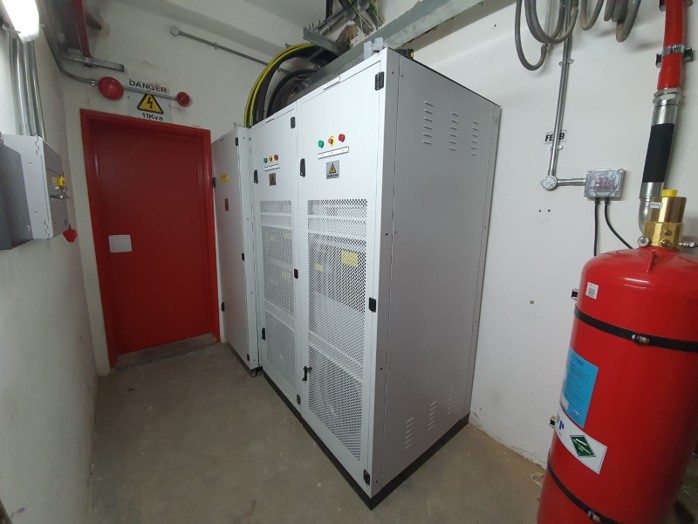
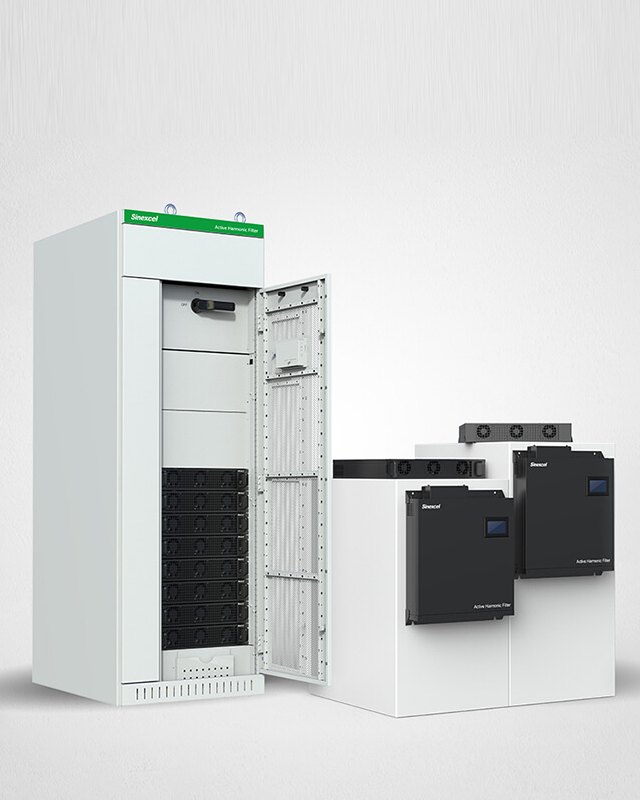
Our compact Sinexcel active harmonic filters can mount on a wall or in a cabinet and can be combined as your site grows.
- Removes harmonics from the 2nd up to the 50th order, all at once
- Also corrects power factor and balances uneven loading between phases
- High-efficiency silicon carbide technology runs cooler and wastes less energy
- Touch-screen display shows live distortion, power factor and filter status
- Modular: add capacity later without replacing what you have
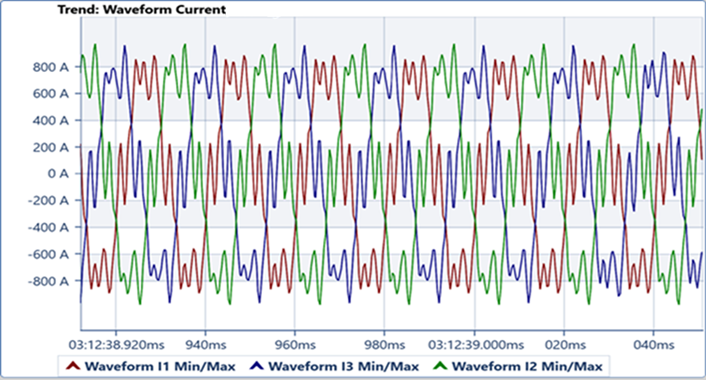
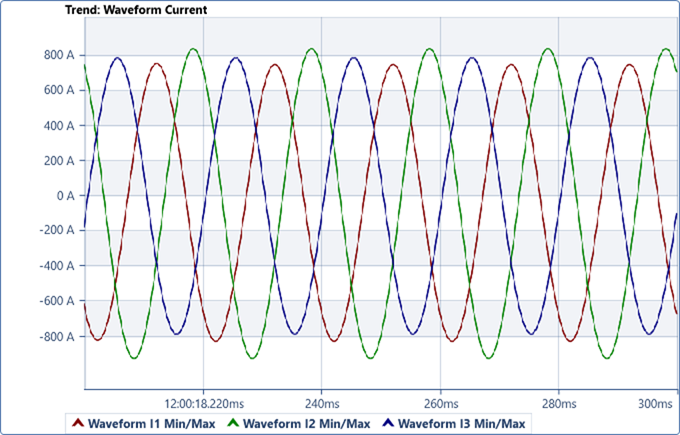
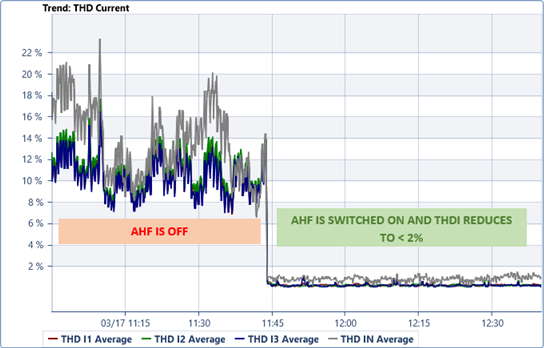
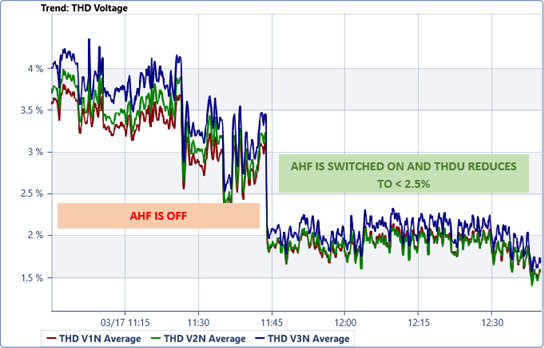
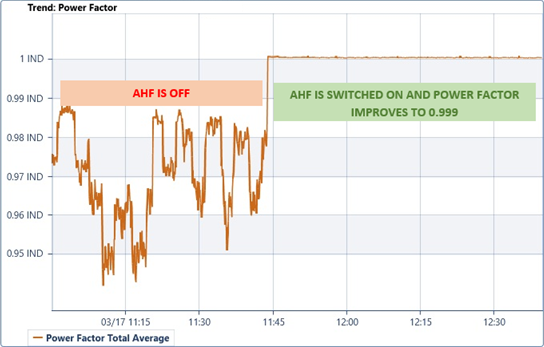
Proof from a real site: textile plant, KwaZulu-Natal
Voltage distortion exceeded the 8% limit and equipment kept failing. We installed an active harmonic filter system and measured the moment it was switched on.
Measure, design, install, verify
Measure
We record your network with a power quality analyser, typically for about a week, to capture every harmonic and how it changes with production.
Design
From your own data we choose the right technology, size it and decide where it should connect. You get a clear report before you commit.
Supply & install
Sinexcel filters installed and commissioned by our team, planned around your production.
Verify
We record again and show you the before-and-after results, then keep the system healthy with scheduled maintenance.
Active harmonic filters: common questions
What is an active harmonic filter?
An active harmonic filter (AHF) is a power-electronic device connected in parallel with your loads. It continuously measures the harmonic current your equipment draws and injects an equal and opposite current, so the harmonics cancel out and your supply delivers a clean waveform.
How do I know if my site has a harmonic problem?
Common signs are capacitor bank failures, hot transformers, cables or neutrals, nuisance tripping, and drives or electronics that fault without an obvious cause. The only way to be sure is to measure: a power quality recording shows exactly which harmonics are present, how large they are and when they occur.
Can an active harmonic filter also correct power factor?
Yes. As well as removing harmonics, a Sinexcel AHF can correct power factor and balance uneven loading between phases. On larger sites it’s often most cost-effective to combine an AHF with a static var generator. We’ll recommend the mix that suits your data.
Will an active harmonic filter save me money?
Usually, yes, though mostly through avoided costs: fewer failed capacitors, fuses and drives, less downtime, cooler-running transformers and cables, and freed-up capacity. Where the filter also corrects power factor, you can save on demand and reactive energy charges too. We show the expected benefits for your site before you commit.
How is an active harmonic filter sized?
From measurements of your actual site, never from a rule of thumb. We record your network and size the filter to the harmonic levels it really produces, including peaks during production. An under-sized filter won’t do the job, and an over-sized one wastes money.
Where is the filter installed?
Usually at the main distribution board, where one filter can clean up the whole installation. On some sites it’s better to place filters closer to large drives or problem loads. The recording tells us which approach works best.
Does an active harmonic filter work with generators and solar?
Yes. Generators are often more sensitive to harmonics than the utility supply, so filtering can make generator operation more stable. Sites with solar inverters also benefit, and the filter adapts as solar output changes during the day.
What standards apply in South Africa?
Voltage quality at your point of supply is governed by NRS 048, and many specifications and utilities also refer to IEEE 519 for current distortion limits. If your supplier or a new connection requires proof of compliance, we measure, report against the relevant limits and show the result after installation.
What maintenance does an AHF need?
Very little. Periodic checks of cooling fans and air filters, a review of the filter’s logged performance and a health check of the connections. We offer scheduled maintenance so the filter keeps performing as your site changes.
Find out what harmonics are doing to your plant
Tell us the symptoms, or send us any existing power quality recordings. We’ll tell you whether harmonics are the cause and what it would take to fix them, before any commitment.
Book a power quality assessment- 📞 083 307 9284
- ✉️ sales@unitypowersolutions.co.za
- 📍 Johannesburg, serving Southern Africa